Old English Translator

Translate modern English into Old English, the Anglo-Saxon language of Beowulf, or turn Old English back into the English we use today. This free Old English translator works both ways and explains every word. Whether you call it an Anglo Saxon translator, a Saxon English translator or an ancient English translator, it’s the same language. No signup needed.

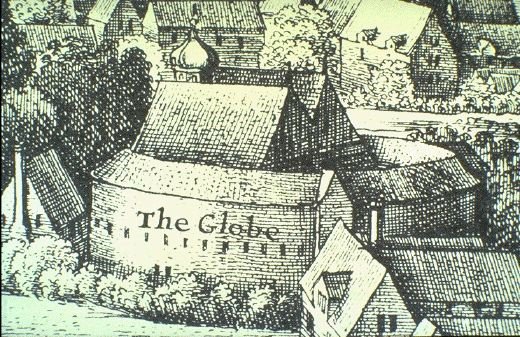
The_Old_Globe image

How to Use the Old English Translator

1

Choose a direction: English → Old English or Old English → English.

2

Type or paste your text. Short, simple sentences work best. Use the letter buttons for þ, ð, æ and ƿ.

3

Press Translate, then open the word notes to see what each word means.

English to Old English Translator

Use this side for translating into Old English. It works as an English to Anglo-Saxon converter: translate to Old English one sentence at a time. Think of it as an Old English converter for your own words, rather than a word list. Old English changes word endings to show each word’s job, so one modern word can have several Old English forms. Plain sentences work best: “The king gave the warrior a sword” translates far better than “Grab your phone, we’re late.”

Old English to Modern English Translator

Paste a line from a poem, a charter or a riddle to translate Old English to modern English. Copy the spelling exactly, including special letters and long marks over vowels (ā, ē), because they can change the meaning.

"Old English" or "Ye Olde" English?

Many people search for an “olde English translator” when they want Shakespeare’s style, with thee, thou and hath. That’s Early Modern English, which is much younger. Real Old English looks like a foreign language to most readers.

You want…The language of Beowulf

It looks like

Hwæt! We Gardena in geardagum

UseThis Old English translator

You want…“Ye olde” Shakespeare style

It looks like

Prithee, good sir, whither goest thou?

You want…Old Bibles and prayer books

It looks like

He hath spoken, and ye shall hear.

What Is Old English?

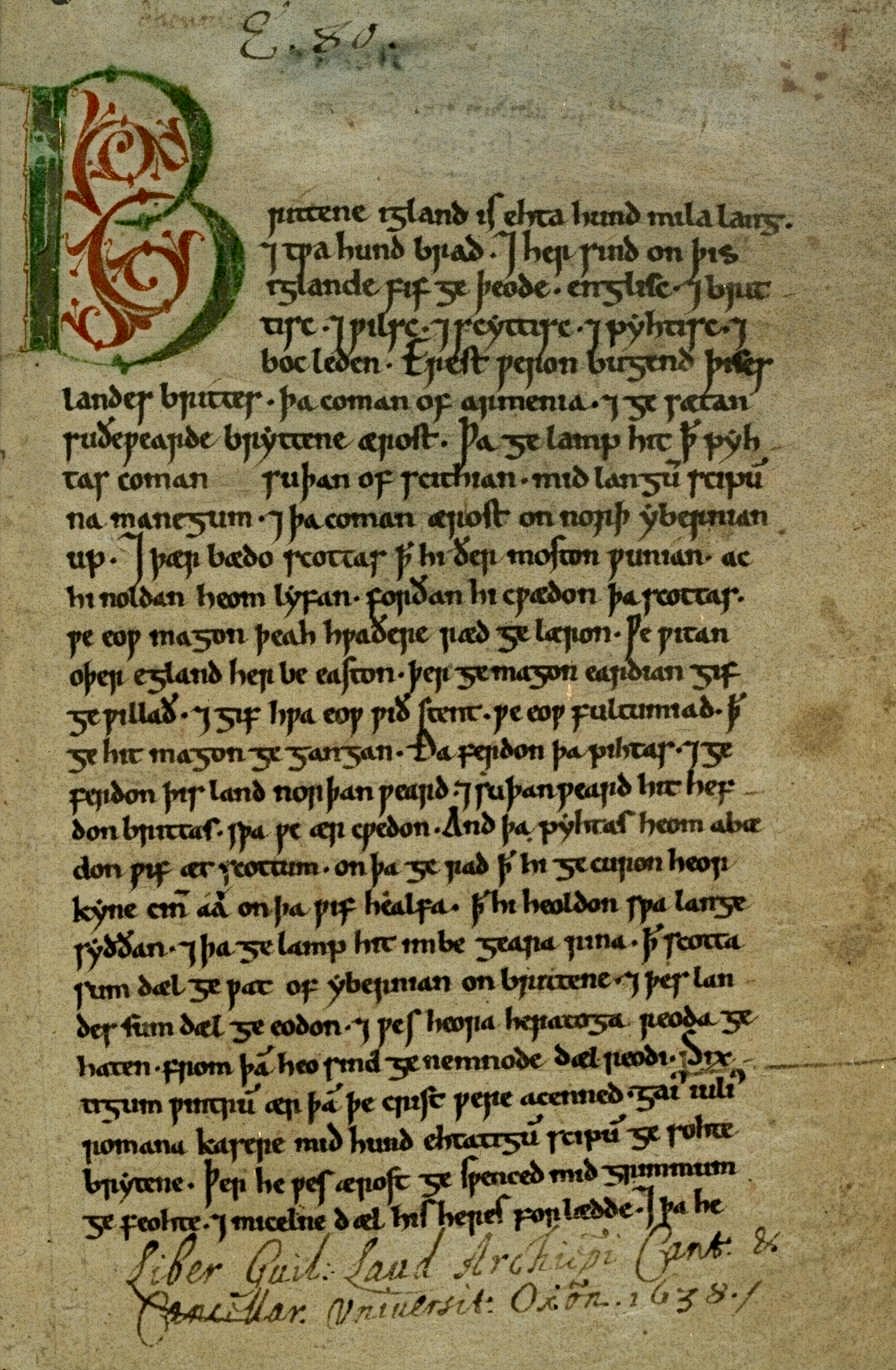
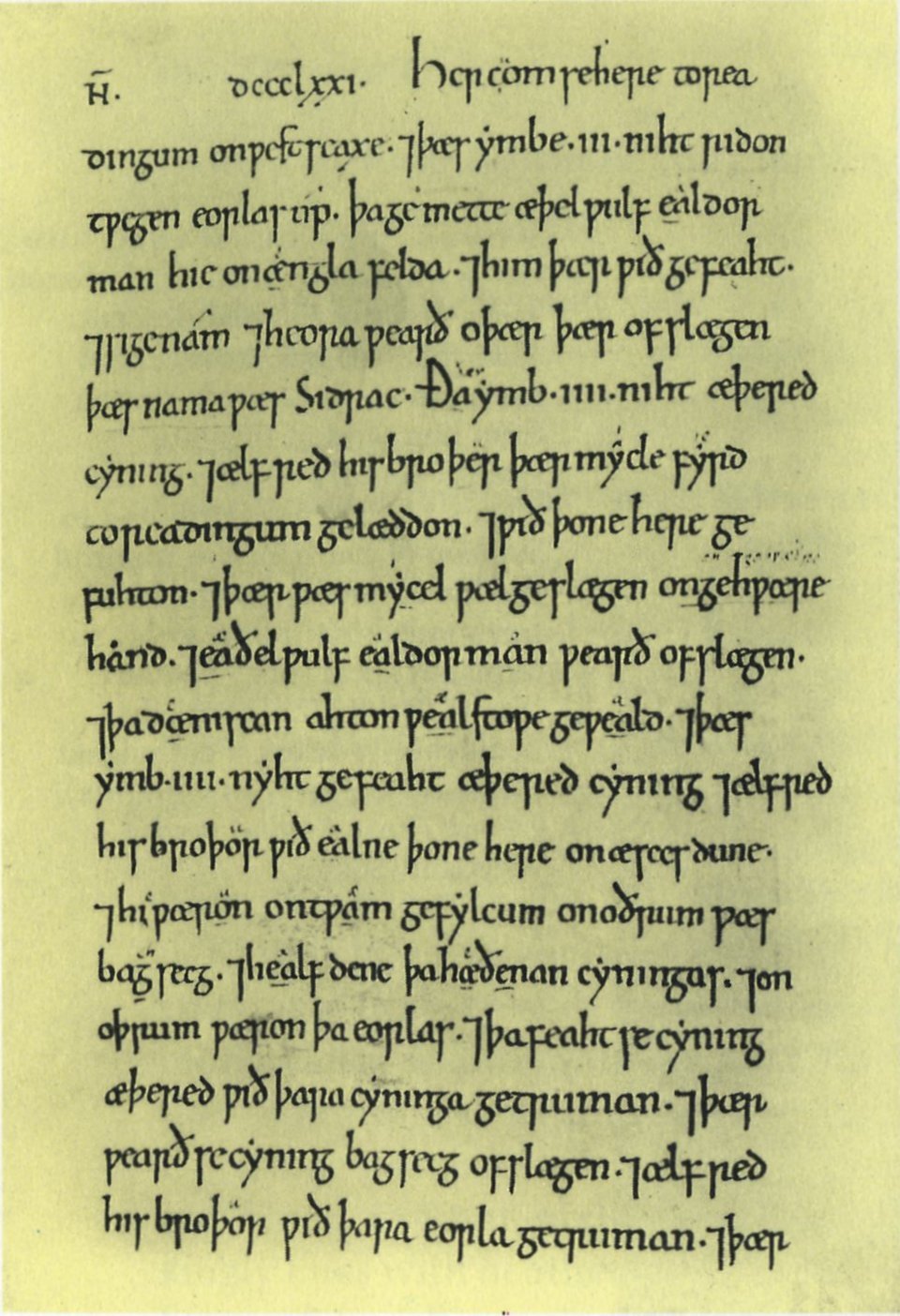
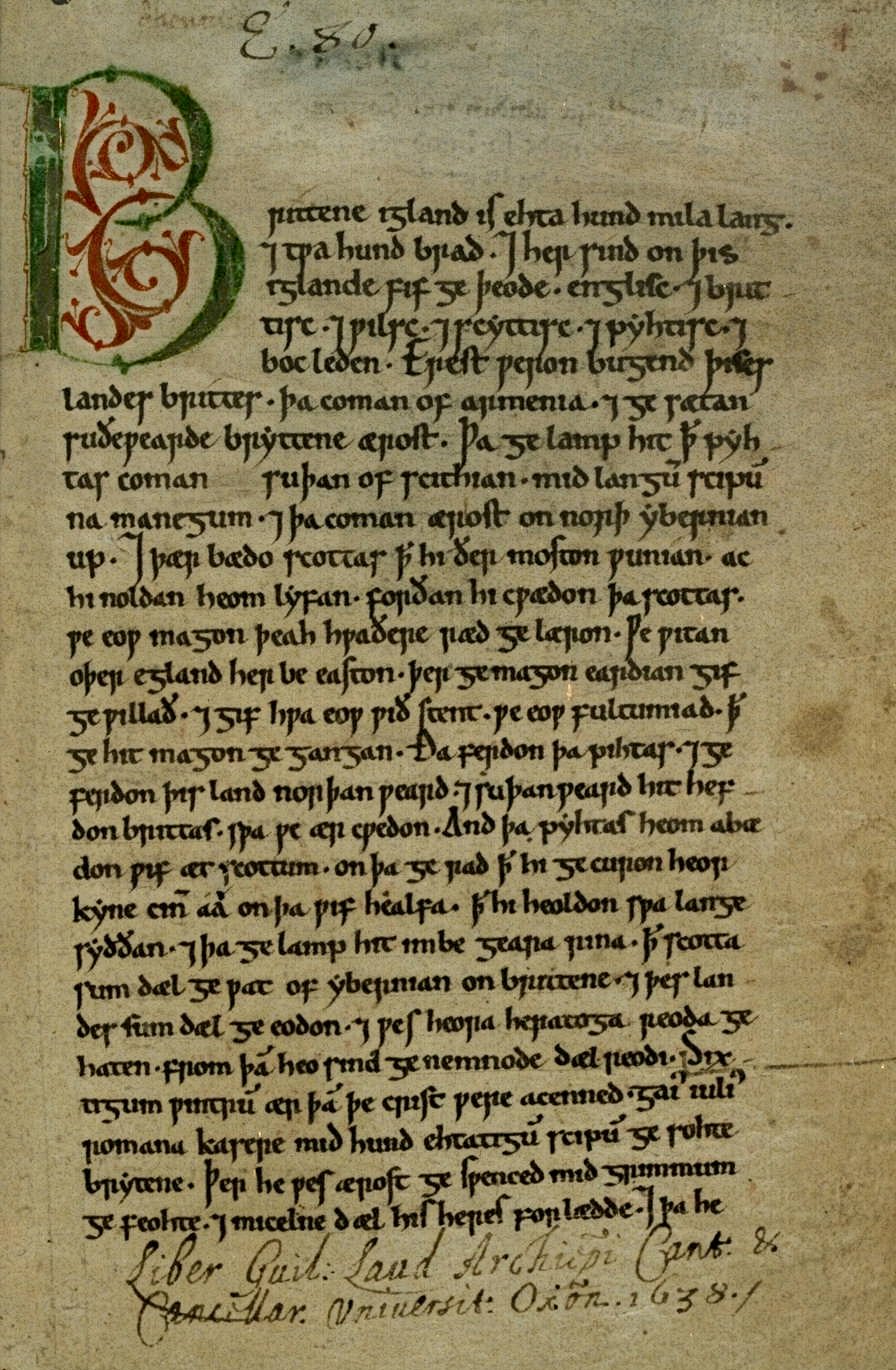
Old English, also called Anglo-Saxon, is the earliest form of English. It was spoken by the Angles, Saxons and Jutes, who settled in what became England, and its speakers called it Englisc. It belongs to the Germanic family, alongside the ancestors of German, Dutch and the Scandinavian languages.

It had several dialects, including West Saxon, Mercian, Northumbrian and Kentish. Most surviving texts are in West Saxon, the form most learners study. Contact with Vikings brought Old Norse words into English, and after the Norman Conquest, French influence helped turn Old English into Middle English. For that later stage, see our [internal link: Middle English Translator].
The Old English Alphabet and Pronunciation

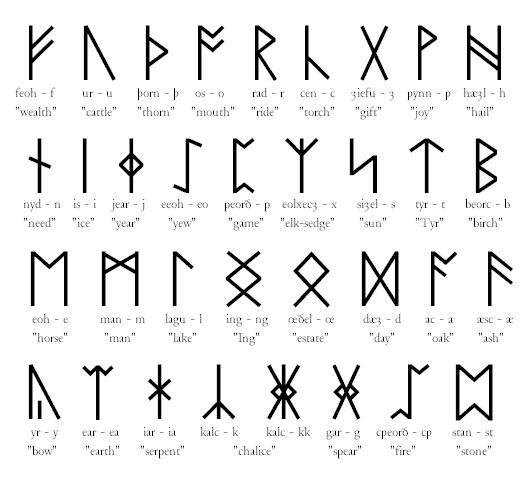
Old English was written in the Latin alphabet, with a few extra letters. Before that, and alongside it, some inscriptions used runes, an alphabet called the futhorc.

Letter

þ

Namethorn

Soundth

Exampleþū (you)

Letter

ð

Nameeth

Soundth

Exampleeorðe (earth)

Letter

æ

Nameash

Sounda as in cat

Exampledæg (day)

Letter

ƿ

Namewynn

Soundw

ExampleUsually printed as w today

Pronunciation tips: sc sounds like sh (scip, ship), c before e or i often sounds like ch (cild, child), and every letter is spoken, even a final -e. A line over a vowel (ā) marks a long vowel.

Old English Grammar in Plain English

Three features explain why a translator can’t just swap words one by one.

Cases. Endings show a noun’s role: subject, object, owner or receiver. In Se cyning geaf þǣm beorne sweord (“The king gave the warrior a sword”), þǣm beorne takes an ending because the warrior receives something.

Gender. Every noun is masculine, feminine or neuter, and it doesn’t always match the meaning. Wīf (woman) is neuter. “The” changes too: se, sēo, þæt.

Strong and weak verbs. Some change their vowel (singan, sang); others add an ending (lufian, lufode). We still have both: sing/sang and love/loved.

Old English Words and Phrases

Modern EnglishOld EnglishNote
Hello / be wellWes hālWishes someone good health
Thank youIc þancie þē“I thank you”
I love youIc lufie þēLufian means “to love”
one, two, threeān, twā, þrēo
king / queencyning / cwēn
lordhlāfordFrom hlāf (bread) + weard (guardian)
fatewyrdThe root of weird

Old English phrases often use kennings, short word pictures: hronrād (“whale-road”) for the sea, and bānhūs (“bone-house”) for the body.

Old English Words We Still Use

You already know some Old English: word, hand, wæter (water), hūs (house), dæg (day), niht (night), mōdor (mother) and fæder (father). Some words changed meaning: drēam meant joy or music, and sellan meant to give.

Famous Old English Texts

Beowulf opens: Hwæt! We Gardena in geardagum, þēodcyninga þrym gefrūnon

— “Listen! We have heard of the glory of the kings of the Spear-Danes in days of old.”

Cædmon’s Hymn begins: Nū sculon herigean heofonrīces Weard

— “Now we must praise the Guardian of heaven’s kingdom.”

The Wanderer, The Seafarer and The Dream of the Rood are poems of loss, exile and faith.

The Exeter Book and the Vercelli Book are manuscripts that preserve many poems and riddles.

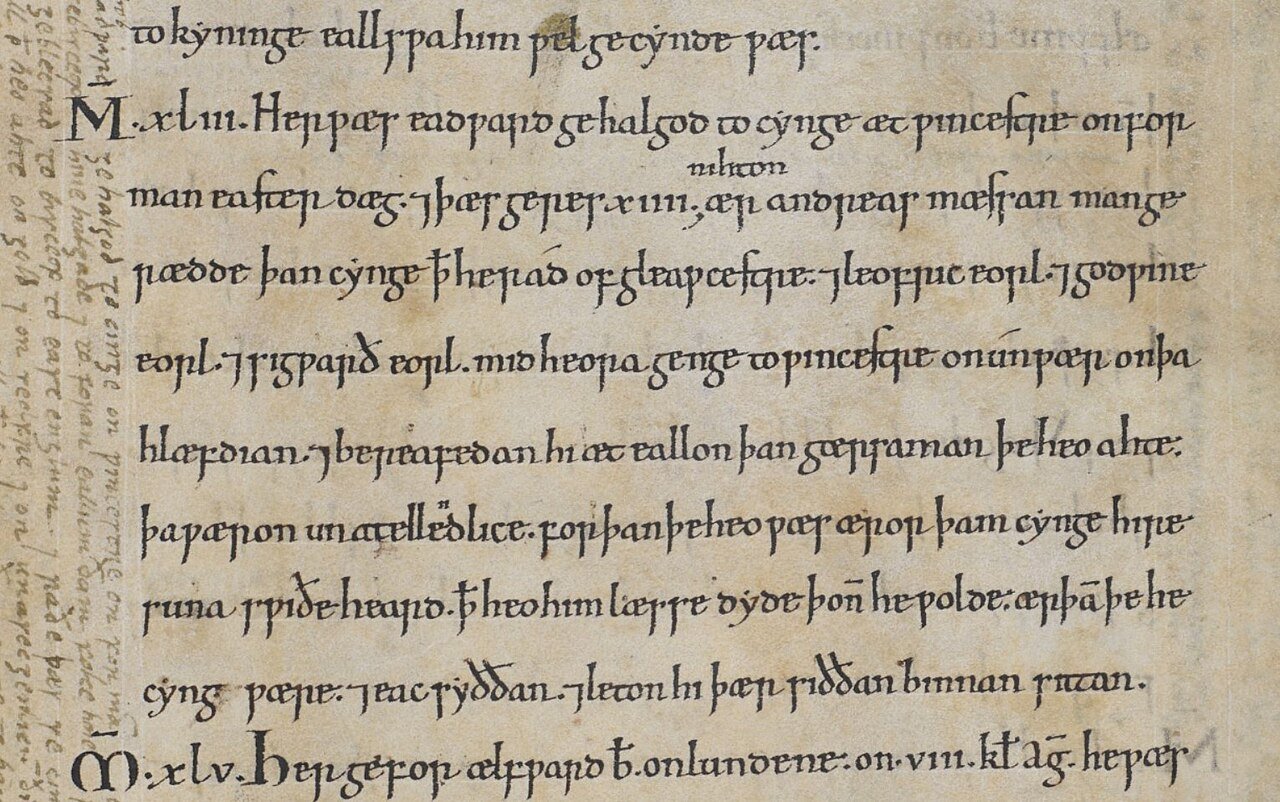
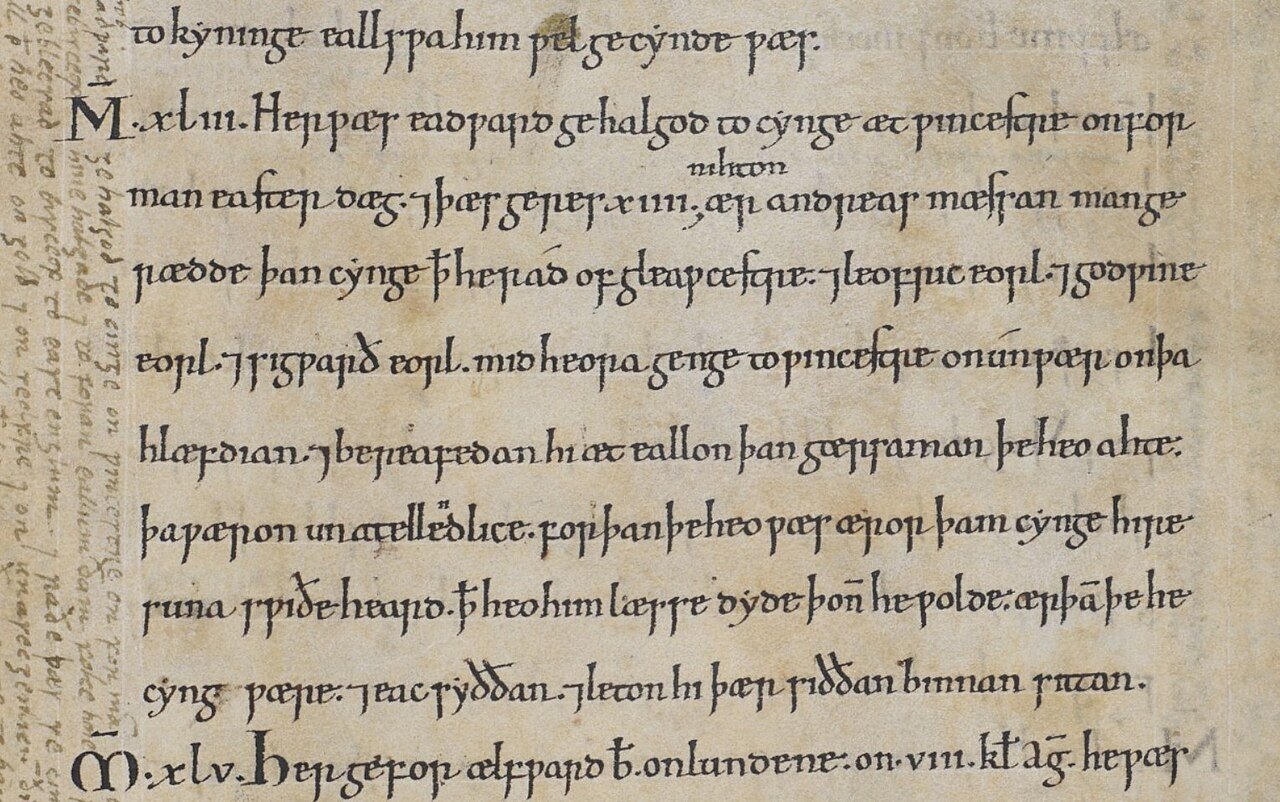
The Anglo-Saxon Chronicle records events year by year.

Old English poems rarely rhyme. Each line splits into two halves joined by alliteration, as in Gardena and geardagum. Alfred the Great promoted English translations of key books, and J.R.R. Tolkien, a scholar of Old English, drew on these poems in his writing.

How to Speak and Learn Old English

1

Learn the four extra letters and how to say them.

2

Learn common words like se, and, ic, wesan (to be) and habban (to have).

3

Read a parallel text, with Old English and modern English side by side.

4

Check each word in a dictionary such as the Bosworth-Toller Anglo-Saxon Dictionary.

5

Read aloud. The poems were made to be heard.

Tattoos and Names: Read This First

A word can be right in one sentence and wrong on its own, because endings change. Keep it to one word or a short phrase, check the special letters (a þ misread as p changes the word), and ask an expert before anything permanent.

Old English Translator FAQ

Is this Old English translator free?

Yes. You can use it without paying or creating an account.

Is Old English the same as Anglo-Saxon?

Yes. They are two names for the same language.

Is Old English the same as Shakespeare's English?

No. Shakespeare wrote in Early Modern English, which is much closer to today’s English.

How accurate is an Old English translation?

It’s a helpful first draft, but no tool is perfect. Many modern words have no Old English match, so check important results in a dictionary.

How do you say "hello" in Old English?

Wes hāl, a greeting that wishes someone good health.

Can I translate modern words like "phone"?

Not directly, because the Anglo-Saxons had no word for them. Use simple, everyday words for the best results.

How do I type þ, ð and æ?

Use the letter buttons under the translator, or copy them from this page.

About This Translator

This Old English translator is built by Chris to make the language of Beowulf and the Anglo-Saxons easier to explore and understand.

How we check our content: Old English words, meanings, and explanations are reviewed against reputable references on Old English and Anglo-Saxon language. If you spot an error, please contact us so we can review and correct it.

How we test the translator: We test different sentences, vocabulary, grammar, and Old English-style wording to improve the consistency and readability of translations.

What happens to your text: Text you enter is processed to provide your translation. See our Privacy Policy for details about how submitted text is handled and retained.