
Shakespeare to Modern English Translator
Paste a line from any William Shakespeare play or sonnet, and this Shakespeare to modern English translator rewrites it in clear, everyday words. It also explains the hard words, so you understand the line instead of just swapping it. Use it as a Shakespearean to English translator for homework, rehearsal or reading for fun. It’s free, and you don’t need to sign up.
Written by Chris · Reviewed by Dian ·
Understand the Translation
Recent translations
Free · No signup · Translations are Shakespeare-inspired renderings, not authentic quotations.
Free · No signup · Up to 2,000 characters · Word-by-word notes
How to Translate Shakespeare into Modern English
Want to translate Shakespeare into modern day English? It takes about as long as reading this sentence.
1
Paste the passage into the box. A single line works, and so does a full speech, up to 2,000 characters.
2
Check the direction. It should say Shakespearean → English. Pick Natural for the plainest wording.
3
Press Translate. Read the modern version, then open Understand the Translation to see what each old word means.
Tip: to translate Shakespeare to modern English line by line, keep the original line breaks when you paste a speech. It makes it easier to match each modern sentence to the line it came from. For a long scene, use Translate a File instead of pasting.
Which Style Should You Pick?
All four styles give you modern English. They differ in how much of Shakespeare’s feeling they keep.
Natural
What you getThe plainest, simplest wording
Best forHomework, revision, English learners
Classic
What you getClear modern English that keeps a little formality
Best forEssays and close reading
Dramatic
What you getKeeps the emotion and force of the speech
Best forActors and read-throughs
Poetic
What you getKeeps some rhythm and imagery
Best forSonnets and love speeches
Shakespeare into English: What the Translator Changes
Any good Shakespeare to English translator changes five things. Knowing them helps you check the result and read Shakespeare on your own.
1
Pronouns become modern. Thou and thee become you. Thy and thine become your or yours. Ye becomes you when it means more than one person.
2
Verbs lose their old endings. Thou knowest becomes you know. He hath becomes he has. She doth becomes she does.
3
Word order is put back. Shakespeare often moves the verb or object to the front for rhythm. Him did I see becomes I saw him.
4
Old words are replaced. Anon becomes soon. Ere becomes before. Prithee becomes please.
5
Meaning comes first. When a line uses a metaphor or a pun, a good translation says what the line means, not just what each word says.
That last step is what separates a Shakespeare translator to modern English from a simple word list. A word list can tell you that ere means before. It can’t tell you what a whole speech is about.
Shakespearean to English Translation Examples
These short lines show each type of change in action. They’re written in Shakespeare’s style to test the tool, and your result may vary a little by style.
| Shakespearean English | Modern English | The tricky part |
|---|---|---|
| Wherefore dost thou weep, good cousin? | Why are you crying, my friend? | Cousin could mean any relative, or one noble greeting another, not just a cousin. |
| I prithee, tarry but a while. | Please, stay a little longer. | Tarry means stay. But here means only. |
| Hast thou seen my brother this morn? | Have you seen my brother this morning? | Hast thou is a question with the verb first. |
| Marry, ’tis a goodly jest! | Indeed, that’s a good joke! | Marry is a mild oath, like “indeed.” It has nothing to do with weddings. |
| Get thee to thy chamber ere thy father comes. | Go to your room before your father gets here. | Ere means before. Chamber means room. |
| An thou lovest me, speak. | If you love me, say so. | An means if. |
| I am sad, my lord, not merry. | I’m being serious, my lord, not playful. | Sad often meant serious, not unhappy. |
| She will come presently. | She’ll come right away. | Presently meant immediately, not later. |
Famous Shakespeare in Modern English: Passages by Play
This is Shakespeare in modern English, one play at a time. Each Shakespeare modern translation below sits beside the original line. Paste any of them into the tool to see the word-by-word notes.
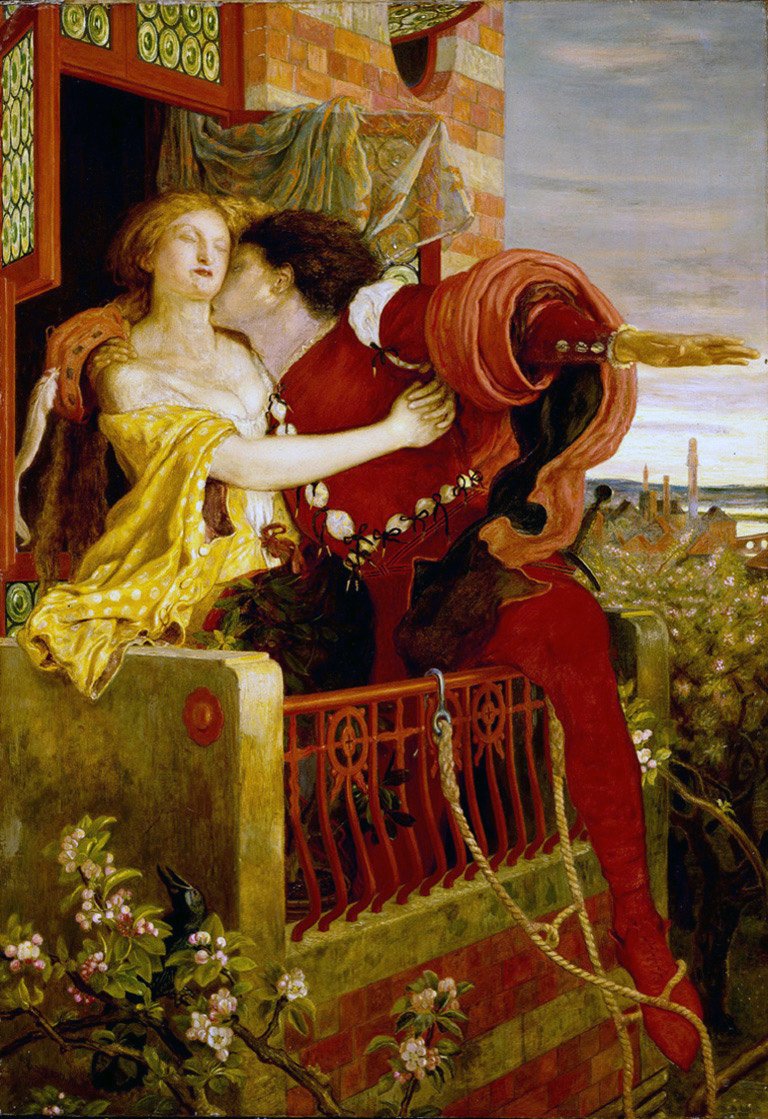
Romeo and Juliet in Modern English
| Original | Modern English |
|---|---|
| But soft, what light through yonder window breaks? It is the east, and Juliet is the sun. | Wait, what’s that light in the window over there? It’s the east, and Juliet is the sun. |
| Good night, good night! Parting is such sweet sorrow that I shall say good night till it be morrow. | Good night! Saying goodbye is so sad and so sweet that I could keep saying it until morning. |
What’s happening: Romeo sees Juliet at her window. Calling her the sun means she lights up his world. Later, neither of them wants the night to end.
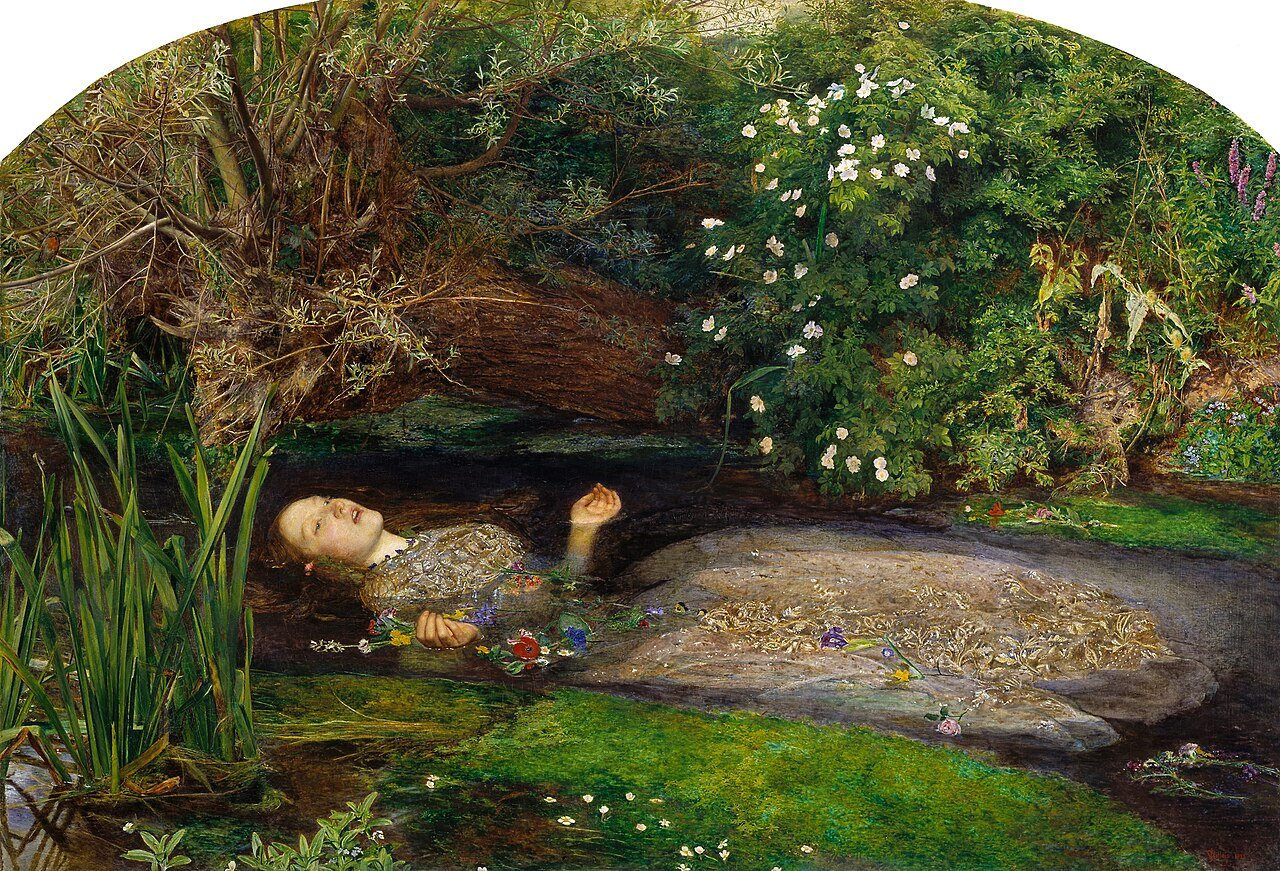
Hamlet in Modern English
| Original | Modern English |
|---|---|
| There are more things in heaven and earth, Horatio, than are dreamt of in your philosophy. | Horatio, there’s more in this world than your learning can explain. |
| Brevity is the soul of wit. | Keeping it short is the key to being clever. |
What’s happening: Hamlet has just seen his father’s ghost and tells his friend that some things can’t be explained. The second line comes from Polonius, who never keeps anything short. Note that wit means intelligence here, not humour.
Line by line: “To be, or not to be”
This speech is a soliloquy: Hamlet is alone on stage, thinking out loud. Here’s how its opening breaks down.
“To be, or not to be, that is the question:”
— Should I go on living, or not? That’s what I have to decide.
“Whether ’tis nobler in the mind to suffer / The slings and arrows of outrageous fortune,”
— Is it braver to put up with all the blows that cruel luck throws at me,
“Or to take arms against a sea of troubles / And by opposing end them.”
— or to fight back against my endless problems and end them?
Notice the image: you can’t really fight the sea. Hamlet’s metaphor already hints that fighting back may be hopeless.
Macbeth in Modern English
| Original | Modern English |
|---|---|
| Out, damned spot! Out, I say! | Get out, cursed stain! Get out, I tell you! |
| Tomorrow, and tomorrow, and tomorrow, creeps in this petty pace from day to day to the last syllable of recorded time. | Day after day crawls by at this slow, small pace, until the very end of time. |
What’s happening: Lady Macbeth sleepwalks and scrubs at blood she imagines on her hands, a sign of her guilt. Near the end of the play, Macbeth feels that life has lost all meaning.
Why it’s hard: damned was a much stronger word then, and petty pace means a small, dull, plodding step. Macbeth translation
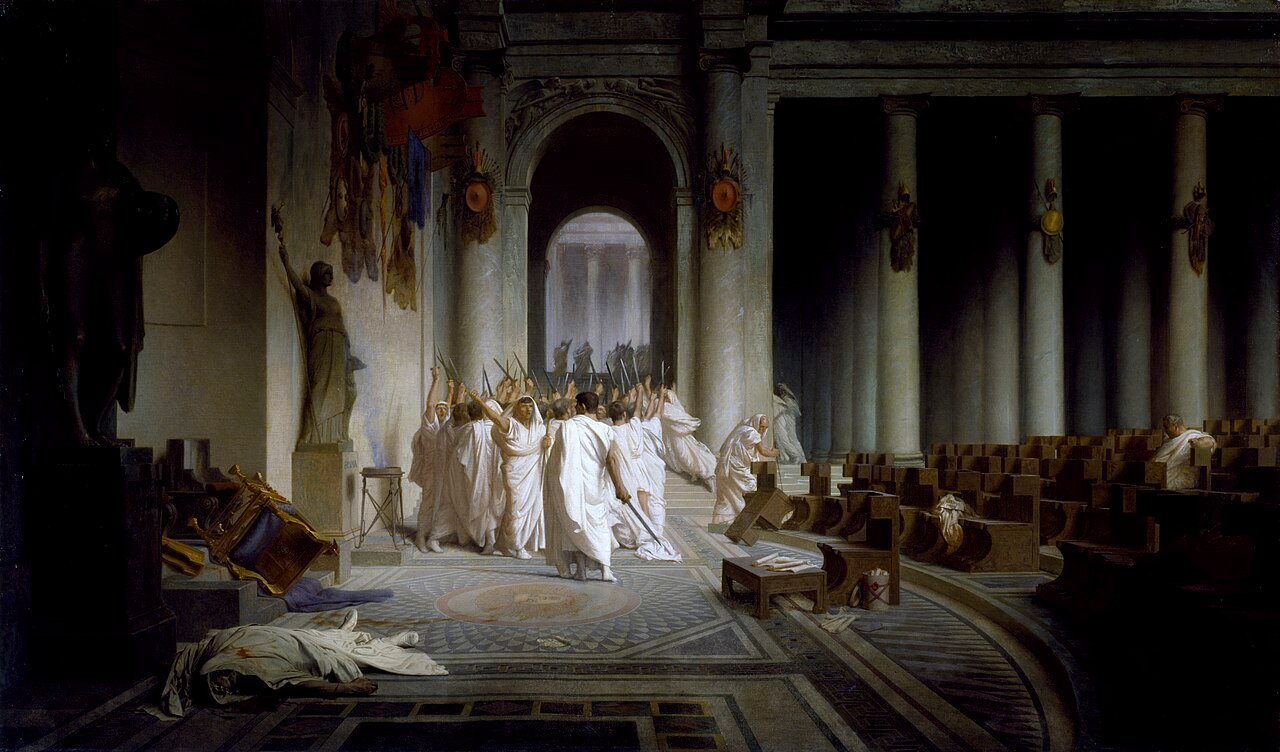
Julius Caesar in Modern English
| Original | Modern English |
|---|---|
| The fault, dear Brutus, is not in our stars, but in ourselves, that we are underlings. | Brutus, it’s not fate’s fault that we’re beneath Caesar. It’s our own. |
| Cowards die many times before their deaths; the valiant never taste of death but once. | Cowards live through death again and again in their fears. Brave people only die once. |
What’s happening: Cassius pushes Brutus to act against Caesar. Later, Caesar brushes off warnings and says fear is worse than death.
Try it yourself: before reading the modern version, find the subject and verb in Cassius’s line. The subject is the fault, and the verb is is. Take out the name in the middle, dear Brutus, and read it straight through: The fault is not in our stars, but in ourselves. Now the meaning is clear: we can’t blame fate.

More Plays in Modern English
| Original | Play | Modern English |
|---|---|---|
| The quality of mercy is not strained; it droppeth as the gentle rain from heaven. | The Merchant of Venice | Mercy can’t be forced. It falls naturally, like soft rain from the sky. |
| How sharper than a serpent’s tooth it is to have a thankless child! | King Lear | Having an ungrateful child hurts more than a snake bite. |
| Lord, what fools these mortals be! | A Midsummer Night’s Dream | Wow, humans are such fools! |
| I am not what I am. | Othello | I’m not the person I seem to be. |
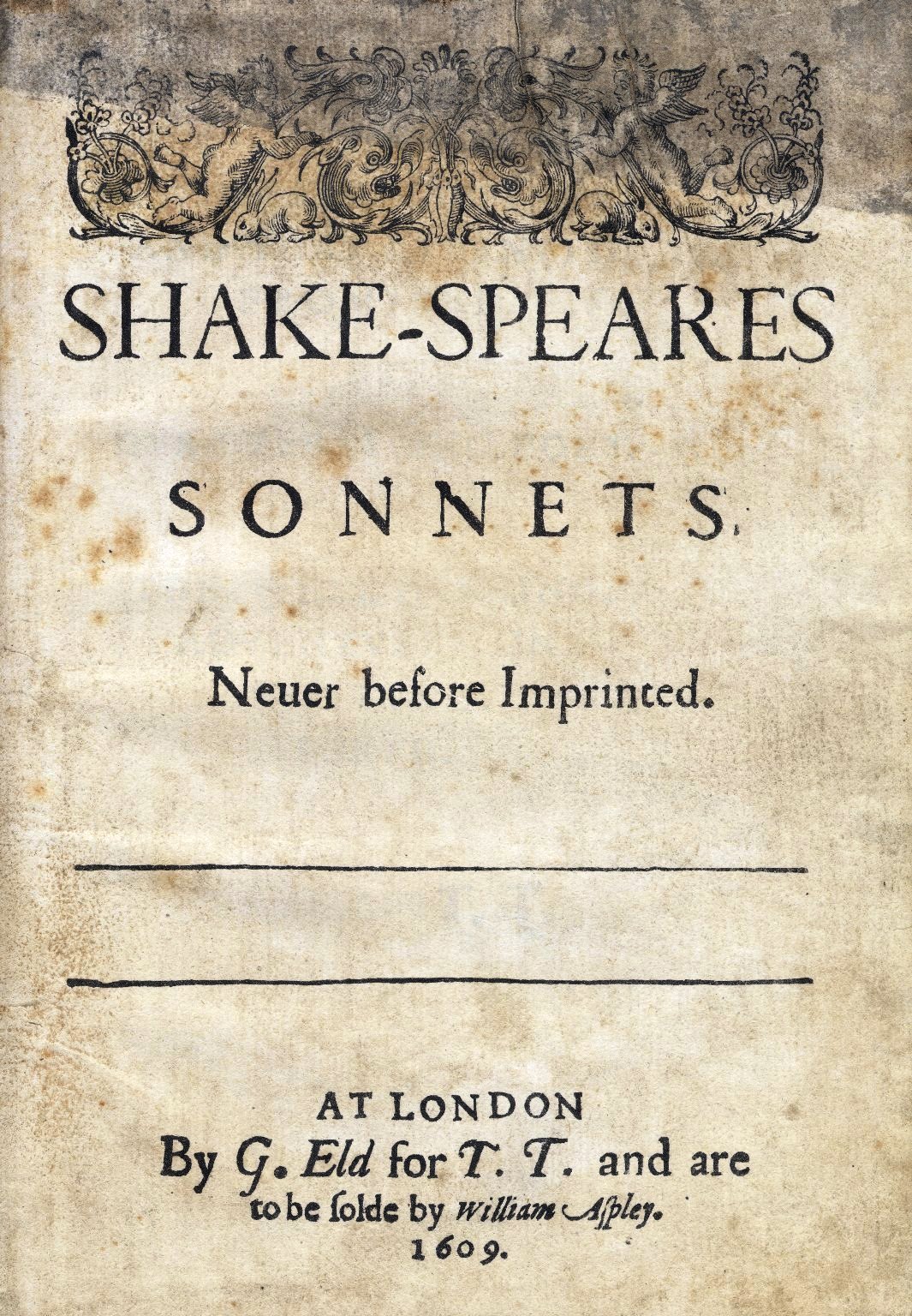
Shakespeare's Sonnets in Modern English
| Original | Sonnet | Modern English |
|---|---|---|
| Rough winds do shake the darling buds of May, and summer’s lease hath all too short a date. | Sonnet 18 | Strong winds shake the lovely spring buds, and summer doesn’t last nearly long enough. |
| Let me not to the marriage of true minds admit impediments. | Sonnet 116 | I won’t accept that anything can come between two people who truly love each other. |
For scene-by-scene help, see our Shakespeare’s Plays in Modern English and Shakespeare’s Sonnets pages.
Why Shakespeare Is Hard to Read
Shakespeare wrote in Early Modern English, also called Elizabethan English. It’s the same language we use today, but with older grammar and some archaic words that have changed or dropped out of use. Most of the trouble comes from six habits of his writing, and they’re exactly what a Shakespeare language translator has to undo. Once you can spot them, the lines get much easier.
1
Old words. Some words have dropped out of use, such as anon, ere and prithee.
2
Old grammar. Pronouns like thou and verb endings like -est and -eth look strange at first.
3
Flipped word order. To fit the beat of a line, he often puts the object or verb first.
4
Squeezed words. Letters get cut to save a beat: ’tis (it is), o’er (over), ne’er (never).
5
Puns and double meanings. In Romeo and Juliet, the dying Mercutio says “Ask for me tomorrow, and you shall find me a grave man.” Grave means both serious and buried.
6
Lines of verse. Much of the dialogue is written in iambic pentameter, a beat of ten syllables per line. When those lines don’t rhyme, it’s called blank verse. One sentence can run across several lines, so read to the full stop, not to the end of the line.
A Five-Step Method to Decode Any Line
Use this when you want to work out a line yourself, then check your answer with the translator.
1. Find the full sentence. Read to the full stop, not the line break.
2. Find the subject and verb. Ask “who is doing what?” and put them back in modern order.
3. Swap the pronouns and verb endings. Thou art becomes you are.
4. Check for false friends. Look for words that seem modern but meant something else (see the table below).
5. Paraphrase it in your own words. Then read the original aloud. It usually makes sense now.
False Friends: Words That Look Modern but Aren't
The hardest Shakespeare words are the ones you think you already know. These words are still used today, but they often meant something different in his plays.
| Word | What it often meant | Example |
|---|---|---|
| wherefore | why | Wherefore art thou sad? |
| still | always, constantly | He still complains. (He always complains.) |
| presently | immediately | Come presently. (Come right now.) |
| sad | serious | Speak sad words. (Speak seriously.) |
| wit | mind, intelligence | He has a quick wit. (He’s clever.) |
| silly | innocent, simple | A silly lamb. (A harmless lamb.) |
| nice | precise, fussy | A nice point. (A fine detail.) |
| naughty | wicked | A naughty deed. (An evil act.) |
| fond | foolish | A fond old man. (A foolish old man.) |
| doubt | fear, suspect | I doubt some danger. (I fear some danger.) |
| protest | vow, promise | The lady doth protest too much. (She makes too many promises.) |
| humour | mood | He’s in a sour humour. (He’s in a bad mood.) |
| temperate | mild, calm | More temperate than summer. (Gentler than summer.) |
| cousin | any relative; also used between nobles | Good cousin. (My dear relative.) |
| an | if | An you please. (If you like.) |
| marry | indeed (a mild oath) | Marry, ’tis true. (Indeed, it’s true.) |
Ten Old Words That Unlock Most Scenes
A handful of words turn up on almost every page. Learn thou / thee (you), thy / thine (your), art (are), hast (have), hath (has), doth (does), ere (before), anon (soon), prithee (please) and ’tis (it is), and you’ll follow far more of each scene. For the full list, open our [internal link: Shakespearean Dictionary].
Using a Modern Translation for School
A modern translation is a study aid for homework and revision, not a replacement for the play. Used well, it helps you follow the plot fast and spend your time on what the lines mean.
1
Read the original first. Even if parts are unclear, you’ll notice the rhythm and the key images.
2
Translate the parts you’re stuck on. Paste a speech, not the whole act, so you stay close to the text.
3
Compare the two versions. Match each modern sentence to the line it came from.
4
Quote the original in essays. Essays and exams usually call for Shakespeare’s own words, not a translation.
5
Write about the language. Note what the original does that the modern version can’t, like a pun, a rhyme or a change from you to thou.
Check your school’s rules before using any translation tool for graded work.
For Actors
Actors need to know what every line means before they can say it with feeling. Paste your part before rehearsal, read the modern version, then go back and mark the words you want to stress. Use Listen to hear the original read aloud.
For Teachers
Show a passage and its modern version side by side, then ask the class what was lost. It’s a quick way to start a talk about word choice, rhythm and double meanings. The false-friends table above also works as a starter activity.
For English Learners
Shakespeare is hard even for native speakers, so don’t worry if it feels slow. Use the Natural style for the simplest wording, and read the word notes to build your vocabulary one line at a time.
Shakespeare to Modern English vs English to Shakespearean
These are two different jobs. This page turns Shakespeare’s lines into plain modern English, so you can understand them. Our Shakespearean translator does the opposite: it turns your modern words into Shakespeare’s style, so you can sound like the Bard in a card, a caption or a story.
Shakespeare → Modern English (this page)
You pasteA line from a play or sonnet
You getPlain English and word notes
Best forHomework, reading, acting, teaching
English → Shakespearean (homepage)
You pasteYour own modern words
You getText with thou, hath and prithee
Best forCards, captions, jokes, creative writing
Should Shakespeare Be Translated into Modern English?
People disagree, and both sides make a fair point. The best answer is to use a translation as a bridge to the original, not a replacement for it.
The case for
It helps new readers follow the story and the characters.
It removes a barrier for students and English learners.
Some theatre makers stage modern verse versions to help audiences.
The case against
Plain English loses the rhythm, rhyme and puns.
The exact words are the art, and they can’t be swapped without loss.
A translation reflects one reader’s choices, so meanings can narrow.
Our approach: translate the line, understand it, then go back and enjoy the original.
Shakespeare to Modern English FAQ
What is a Shakespeare to modern English translator?
It’s a tool that rewrites lines from Shakespeare’s plays and poems in plain, modern English. This one also explains the old words, so you learn what each line means.
Is this Shakespeare translator free?
Yes. It’s free to use, and you don’t need an account.
How is this different from a Shakespeare translator that makes text sound old?
This page goes from Shakespeare to modern English, to help you understand his lines. A Shakespearean translator goes the other way and makes your modern words sound like Shakespeare.
Can I translate a whole scene or speech?
Yes. Paste up to 2,000 characters at a time. For a longer scene, translate it one speech at a time or use Translate a File.
How accurate is the modern English translation?
It gives a close, readable meaning, but no tool is perfect. Some lines have more than one meaning, especially puns. For school or stage work, compare the result with the original and a trusted edition of the play.
Does a modern translation lose the poetry?
Yes, some of it. Rhythm, rhyme and wordplay are hard to keep in plain English. Use the translation to understand the line, then go back to the original to enjoy how it’s written.
Is it okay to read Shakespeare in modern English?
Yes, as a way in. Reading a modern version first can help you follow the story before you tackle the original. For essays, quote Shakespeare’s own words.
How do I translate Shakespeare into modern English myself?
Read to the full stop, find who is doing what, swap old pronouns and verb endings, check for words that changed meaning, and then say the line in your own words.
Does it work on Shakespeare's sonnets?
Yes. Paste a sonnet or a few lines from one, and the translator gives you a plain-English version with notes on the hard words.
Can I use it for Old English texts like Beowulf?
No. This tool is for Shakespeare’s Early Modern English. Old English Translator is a much older form of the language and needs its own translator.
About This Translator
This Shakespeare to modern English translator is built by Chris. We made it because Shakespeare’s stories deserve to be understood, not just survived in class.
How we check our content: Every passage and modern version on this page is checked.